| What: Little Shop of Horrors When: August 22 to September 6, 2025 Where: The Masque, 37 Main Rd, Muizenberg, Cape Town Bookings: Quicket Direction and choreography: Jeffrey Johnson Musical direction: John McGuiness Cast: Gregan Aherin as Seymour; Kay Mosiane as Audrey; Jeffrey Johnson as Audrey II; Ethan Wilton as Mr. Mushnik; Andrew Munnik as Orin and Claire Thomson, Rufaro Mvududu and Rachel Suttle as the Urchins Age restriction: No under 13s Masque box office: Open Tuesday, Wednesday and Fridays between 9am and 2pm Good to know: Secure parking, wheelchair access and facilities available |
“To me, Audrey II represents power-hungry figures – politicians, preachers, celebrities, billionaires – who feed on the vulnerable for their own gain. It’s Faust all over again”, reflects Jeffrey Johnson who is playing the blood quaffing plant in Little Shop of Horrors which is on at the Masque, Cape Town, August 22 to September 6, 2025. In addition to playing Audrey II, he is also choreographing and directing. In conceptualizing the production, he has gone back to the roots of the original musical which premiered in 1982 in Greenwich Village, New York City. “Ultimately, this production is about returning to the show’s roots – bringing back the bite it had when it first hit the stage. That bite is already in the script; we’re just letting it show”, says Johnson. He is an American who has made Cape Town his home and shares insights into the production:
TheCapeRobyn: Canyou talk about going dark and scarier in this production?It IS a hectic story – blood lusting plant, Audrey admitting that she is happy that her abusive boyfriend died by asphyxiation: Seymour dying, the plant taking over and being famous.
Jeffrey Johnson: Little Shop debuted in 1982 in a small theatre in Greenwich Village. It was a time and place where darkness was everywhere. “The Village” was dangerous. Buildings were literally falling apart. So much was rubble. Violent crime was a way of life in the Village. It pulsed with anti-establishment energy and the emerging musical revolution of punk. The show was born out of that grit and edge and it was much darker than the family-friendly version popularised by the 1986 film. What was once edgy may feel tame today, but the show’s core themes—domestic violence, child abuse, self-loathing, greed, exploitation—are still deeply present, worn openly by its characters. Yes, it’s a musical comedy, but one with bite. And it’s a horror story. Horror can be scary and still fun—that tension is part of what makes it work. Our version honours that balance: it’s fun, yes, but it leans into the shadows, too. Audiences will still get the play’s ending they expect—but the road getting there might have a few surprises waiting for them along the way.
TCR: Insights into the design – concept and locations– set, costumes, lighting? locations?
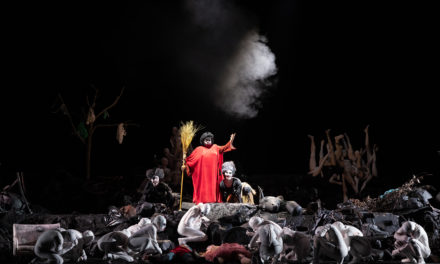
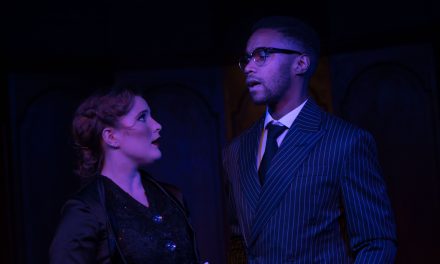
JJ: The play is set primarily in the flower shop and the alley behind it in the depths of Skid Row with one scene in the dentist’s office. It’s a period piece—just listen to the dialogue and song references—so I’ve placed it in 1963, a dark year for the US and a turning point in exposing the reality of America. We’re designing the set, costumes, and props to reflect that era and the decade leading up to it. A major part of telling the story of the plant pod and its development into the human, Audrey II, can only be told visually and there was much time and energy into creating the specific costuming of the plant as a human to assist in making that story as clear as possible. Lighting will deliver the punch you expect from a musical, but it’s also key to building the show’s darker undertones—adding suspense, atmosphere and that eerie, monster-movie vibe.
TCR: Insights into the choreography – dance that you are you referencing?
JJ: The movement for the Urchins is inspired by a mix of early 1960s girl groups and the kind of homemade choreography teenage girls on Skid Row might have come up with in their bedrooms or alleyways after watching those groups on TV. It’s raw, playful, and rooted in character. My overall musical staging style is heavily influenced by the bold, expressive staging that came out of Broadway in the 1970s – gritty, stylized, and full of storytelling through movement.
TCR: Can you tell us about Audrey II and how you are positioning – her as a director and how you are playing her? Audrey II wants to be a celebrity and be famous and take over the world which is kind of emblematic of politicians right now?
JJ: When I was cast as Audrey II—before stepping in as director—I was told the character would appear onstage, not be voiced offstage with a puppet. That raised immediate questions for me, the same ones I knew the audience would have: Who is Audrey II when played by a skinny white guy? What’s the plant, what’s the human? Since we use the puppet early on, but the human emerges only once the plant grows and starts speaking, I imagined the pod as a cocoon. I drew from Black Southern folklore—specifically the Crossroads Demon – for the visual concept, and from 50s sci-fi like Plan 9 from Outer Space and Invasion of the Body Snatchers, where alien pods absorb humans and take their form. I saw our version of Audrey II as a collector of human DNA, eventually evolving into its own being. To me, Audrey II represents power-hungry figures – politicians, preachers, celebrities, billionaires—who feed on the vulnerable for their own gain. It’s Faust all over again. Interpret it how you will. Making Audrey II human adds threat and depth—it’s no longer camp, it’s horror. It allows two humans to interact and tell a deeper story than just relying on the storytelling through the reactions of one actor to a puppet. This deeper, darker tone that is set up by this convention was one of the stepping stones to really defining the overall tone of the production. The Urchins also add another layer to Audrey II’s reimagining, expanding the parts from the dual role of Greek Chorus and a group of 5th grade dropouts on Skid Row to a third, even more sinister addition to their characters…but we can’t spill all of our secrets.
TCR: Where is your production located – in New York as in the Broadway production? What about accents – are SAFFA accents being used or American?
JJ: Our production stays true to the script. It is set in the United States, on Skid Row. There are too many American references to change location without rewriting the script. While the original Skid Row was in Seattle around the turn of the last century, the term has come to represent any place where the poor and forgotten are forced to live. I grew up hearing areas like that called “the slums” or “the projects.” When Little Shop was created, its artistic home—Greenwich Village in NYC—was very much its own Skid Row: dangerous, decaying and full of grit. The actors in our production will be using American accents.
TCR: You are an American, living in Simon’s Town. This production marks your South African debut as actor, choreographer and director. Can you tell us about yourself, your theatre training, work in theatre in the USA. How did you come about to be directing this community theatre production in Cape Town at The Masque?
JJ: I moved to Simon’s Town with my mom and our two dogs last December [2024] because I was done living – angry – angry at the hate that permeated everyday life, the broken system, and the rising threat of fascism in the US. Cape Town felt like the opposite: stunningly beautiful, full of kindness and acceptance, and far from everything I needed to leave behind. After nearly 40 years in theatre, from community stages to running a professional company in DC, to touring original solo work at places like 54 Below at Studio 54 and historic The Stonewall Inn – I know I am an artist at heart. I will always need a creative outlet. So, wherever this move took us also had to be a place that nurtured a thriving arts scene. I chose Cape Town in part because the arts are thriving here. I was already in talks with The Masque when the original Little Shop director sadly stepped down for personal reasons very early in the process – we were still just learning music. From what I understand, she and the music director, John McGuiness recommended me to the Masque, the Masque team agreed and I said yes.
TCR: Anything else to add?
JJ: Ultimately, this production is about returning to the show’s roots—bringing back the bite it had when it first hit the stage. That bite is already in the script; we’re just letting it show. We’re leaning into the horror movie vibe it was born from, while also highlighting how the issues it tackled nearly 45 years ago—abuse, exploitation, desperation, greed—are still relevant today. It’s dark, it’s funny, it bites. You will hear all the songs you have come to love while maybe hearing them in a different light. The catch phrase I like to use is “See it for the first time…AGAIN!” So come, get your ticket, grab some popcorn, settle into your seat, and enjoy the “monster movie.”

✳ Jeffrey Johnson is directing Little Shop of Horrors, at the Masque in Cape Town, .August 22 to September 6, 2025 . He is also the choreographer and is performing as Audrey II. Pic: Supplied.