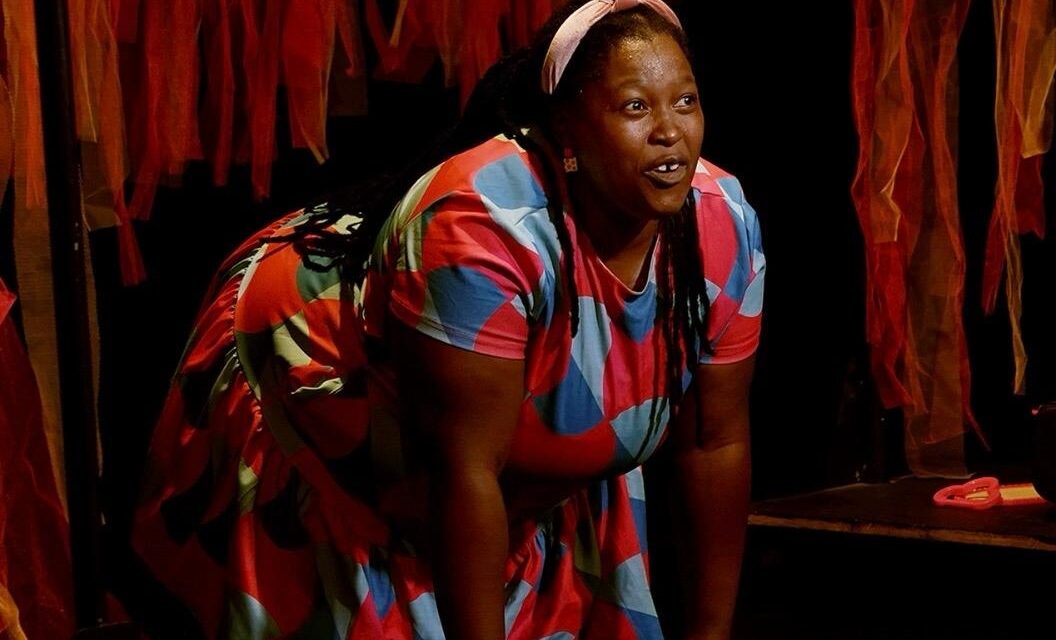
| What: Don’t Believe A Word I Say Written and performed by: Tankiso Mamabolo Directed by: Faniswa Yisa When: Feb 24, 25, March 2, 3, 4, 2026 Where: Theatre Arts, Cape Town Bookings: https://theatrearts.co.za/ Produced by: DMR PRODUCTIONS |
Don’t Believe A Word I Say, written and performed by Tankiso Mamabolo and directed by Faniswa Yisa is on in Cape Town at Theatre Arts. Feb 24, 25, March 2, 3, 4, 2026. I am thrilled that I finally got to see Mamabolo’s Fleur du Cap nominated comedic solo show. It is a treat, with a biting edge.
Mamabolo is a dynamo and in this autobiographical based show, she meshes her dramatic and vocal smarts. Standing ovation on the night that I attended, for this powerhouse performer.
She is just a gal of 32, taking us along as she wryly observes her journey “as an awkward black girl who just wants to be loved and accepted.” Those are her words. In her quest to be loved, accepted, there are references to aspiring to measure up to Julia Roberts and Pretty Woman. As it happens Pretty Woman – the Musical – will soon be on stage in Cape Town – which gives the current season of Don’t Believe A Word I Say, a contemporary resonance.
I saw Mamabolo recently, singing in The Great American Songbook at Maynardville Open-Air Festival and here she is in this poignant coming-of-age quirky and funny (and not so funny) interrogation of “young black girls growing up in a patriarchal and hyper-masculine culture” (her description) and all the issues that went with her territory – pressure of measuring up to Hollywood, grappling with perceptions of beauty and representation, having Black male role models.
In tandem with the narrative – and she writes beautifully – with spunk, verve and confidence – is a visceral narrative with her body as conduit. It is the stuff that goes beyond words, beyond what she is saying and whether we should believe her or not. The body – her body – speaks volumes – of her generation – the so called Born Frees – who were born in 1994/5, after democracy. It was the dawning of the Rainbow Nation but within the euphoria, bitter disappointment and rage percolated, culminating in the so-called Fallist Movements, #RhodesMustFall and #FeelsMustFall in 2015.
Mamabolo first came to my attention when she performed in The Fall (2017, Baxter), directed by Ameera Conrad which featured UCT drama students who graduated at the end of 2015 and who were active in the movements. They activated for social change through theatre, with challenging work, subverting perceptions, igniting uncomfortable conversations. Physically driven and urgent, The Fall set the bar for much post Rainbow Nation work, protest work, tapping into the zeitgeist of the Born Free generation who interrogated and questioned freedom – political and personal; gender; sexuality, financial etc The performers in The Fall, were age 21/22/23 ish in 2015. The production was workshopped by the young theatre makers, under the mentorship of Clare Stopford, who was a UCT drama lecturer at the time. The students shared their experiences of the student protests and how it impacted on race, gender sexuality and other issues – the “normal” stuff flickering around “coming of age”, against the lens of The Fallist Movements. That I think was the first time that I saw Mamabolo on stage. It was a “whoah” moment, watching this perform with a tangible presence– who used her body in conjunction with her voice as she manifested her character on stage.
Eleven years later, 2026, Watching Mamabolo (32) in Don’t Believe A Word I Say, and I see a meta-text, through her body, as she physically crouches, prowls around the space, sizing herself up and sizing the world that she navigated. It wasn’t just the “normal” aspirations that a young girl might follow – “being married by 30 – with first child”. She tells us about her wish list, with a wry smile. It was the load that went with her generation – and persists. That load is pulling at the edges of the hugely entertaining Don’t Believe A Word I Say, urgent, beautiful, uplifting, with deft direction by Faniswa Yisa. It is a lament and it is also a celebration of the people who were there for her, such her uncle who had her back; who made her feel loved, safe, accepted.
✳Tankiso Mamabolo in Don’t Believe A Word I Say. Pic: Supplied.