Every three years, the Thrive by Five Index assesses how four-year-olds are developing in three critical areas. The index is South Africa’s only nationally representative survey of preschool child outcomes. According to the 2024 Thrive by Five Index, the bottom line is that “children in high-fee early learning programmes (ELPs) are twice as likely to be developmentally on track than those in low-fee ELPs”. And within those statistics, consider the nutrition factor. “Nearly 7% of enrolled four-year-olds are moderately or severely stunted, while another 25% show signs of mild stunting.” Read on for more. Info as supplied:
South Africa’s Youngest Children Pay the Price of Inequality, 2024 Thrive By Five Index Finds
The 2024 Thrive by Five Index, South Africa’s most comprehensive national survey of preschool child outcomes, confirms what many of us already know: our poorest children continue to be denied an equal opportunity to thrive.
Conducted every three years, the Thrive by Five Index is South Africa’s only nationally representative survey of preschool child outcomes. It assesses how four-year-olds are developing in three critical areas: early learning, physical growth, and social-emotional wellbeing.
The 2024 Index makes it clear that inequality in South Africa is already shaping children’s futures before they even enter school. Children in high-fee early learning programmes (ELPs) are twice as likely to bedevelopmentally on track than those in low-fee ELPs. These disparities demonstrate how poverty and fees act as structural barriers that prevent poor children from reaching their full potential.
Devastatingly, for the 29% of four-year-old children not enrolled in ELPs, a sub-study in the 2024 Thrive By Five Index suggests the results are likely significantly worse.
What the Data Tells Us
The 2024 Index confirms that access alone is not enough. Fewer than half (42%) of enrolled four-year-olds are developmentally on track. This means that even though children are in ELPs, less than half are meeting their milestones, showing that quality matters just as much as access. This amplifies Real Reform for ECD’s (RR4ECD) call for holistic, quality, and inclusive services that do more than open the door; they unlock potential.
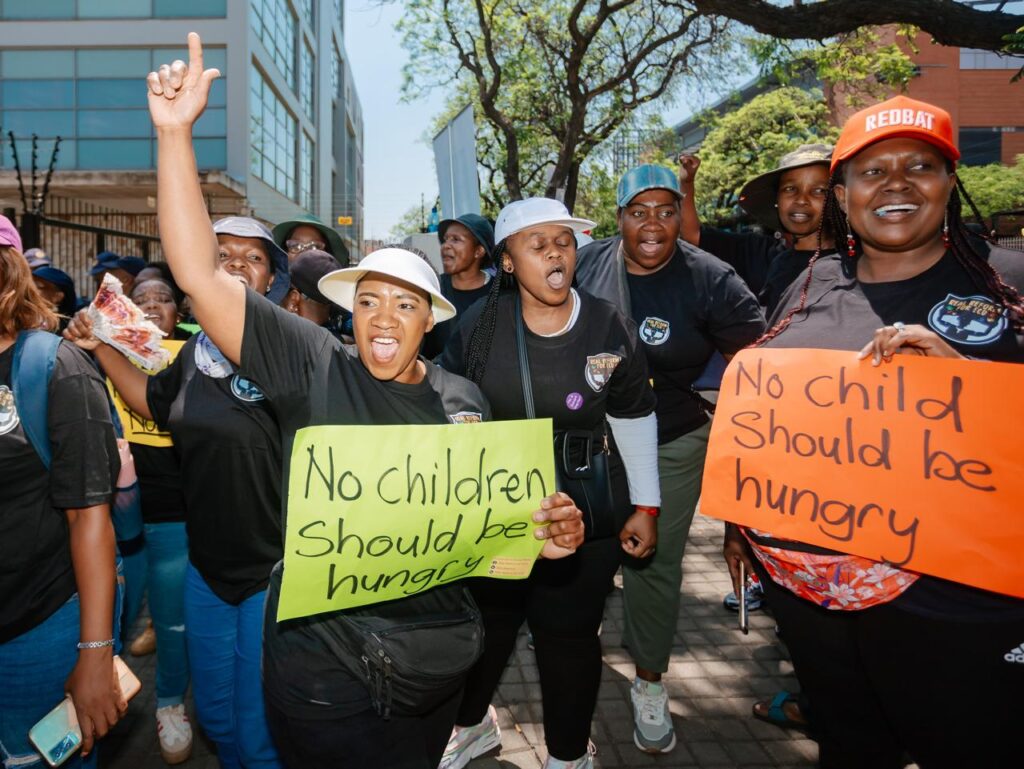
The Index also highlights that nutrition remains a major barrier. Nearly 7% of enrolled four-year-olds are moderately or severely stunted, while another 25% show signs of mild stunting. Stunting is not only about physical growth; it sets children back months in learning and undermines their readiness for school. Unfortunately, the 2024 Index only shows a fraction of the full picture. It assesses four-year-olds attending centres, where around 90% already receive at least one meal a day. In reality, the rates of stunting across all young children are significantly higher.
The data makes clear that the crisis facing our young children from birth to five years old cannot be solved by the Department of Basic Education alone. Children’s outcomes are shaped by the interplay of nutrition, health, home environments, safety and security, and early learning quality from birth.
We believe this demands strong intersectoral coordination and collaboration, across government departments, municipalities, the private sector, NGOs, and communities, so that young children receive the comprehensive support they need to thrive.
From Evidence to Action: A Call We Cannot Ignore
“If we are serious about breaking the cycles of poverty and inequality in South Africa, then we must see early childhood development as one of the most powerful levers we have,” said Tshepo Mantjé, Right to ECD Coordinator at RR4ECD. “Children thrive when systems enable them to thrive. No child should be doomed by the circumstances of their birth.”
RR4ECD echoes the recommendations of the 2024 Thrive by Five Index and calls on government to take bold action:
● Expand access: Ensure every young child, including children with special needs, in poor and vulnerable communities, can access quality and holistic early learning.
● Spend the money: Ensure that ECD budgets, including the recent R10 billion investment in ECD over three years, is spent quickly and transparently.
● Pay the subsidies: Pay the R24 per child per day subsidy consistently, on time, and without bureaucratic delays to all eligible ELPs.
● Tackle stunting: Ensure that ELPs with bronze level registration through the Bana Pele Mass Registration Drive receive nutrition support through a national ECD nutrition programme.
“We all have a crucial role in turning evidence into action,” Mantjé added. “Data must drive advocacy and accountability, ensuring that no child is left behind.”
✳ Sponsored content. Images supplied.