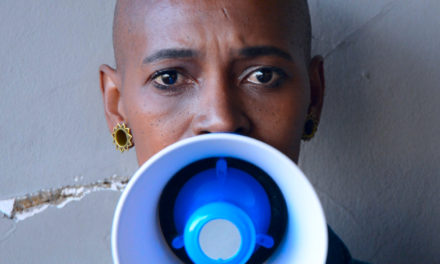
| What: Please, don’t call me moffie Writer/director: Zubayr Charles Performer: Anzio September Where: Artscape Arena Theatre When: June 2-6, 2026 (seven performances) Age restriction: No under 16s Content warning: Language, violence, and nudity Duration: 50 minutes, no interval Performance dates and times: Tuesday, June 2, 2026 — 19:00 Wednesday, June 3, 2026 — 19:00 Thursday, June 4, 2026 — 19:00 Friday June 2026 5— 15:00 and 19:00 Saturday, June 2026, 6— 14:00 and 18:00 |
“Storytelling should be used to create a much-needed voice for those who are marginalised in society”, reflects Zubayr Charles and he does this in his work, which includes plays, poems and a novel. His acclaimed play, Please, don’t call me moffie, will have its first “official” run in the Artscape Arena, from June 2-6, 2026. The one-hander which has been on the festival circuit, stars Anzio September, who plays five characters. Charles who also directs, hopes that people leave the theatre “with a little more peace and compassion”.
TheCapeRobyn: Firstly before we get to Please, don’t call me moffie, nominations for the Cape Town Theatre Awards, which were announced, last week [May 20, 2026]. Congrats on your nomination for best new director for this bra’s a psycho and for best actor for Anzio September. Exciting news – especially in the lead up to Please, don’t call me moffie?
Zubayr Charles: The nomination has been such a surprise. Of course, whenever creating art, I would want to put the best foot forward and whole-heartedly believe in the work, but I never want to be biased, or over-confident. There has always been an electrifying and tangible atmosphere in the show, and I’d like to think that majority of the audiences and the CTTA panel felt it too. We loved how responsive and interactive our audiences were, so it of course means the world to me that we have been nominated.
TCR: Let’s talk about Please, don’t call me moffie. Has the staging been expanded for this, its first “official season”, after its festival runs?
ZC: It’s interesting to see our show constantly develop. The show is depicted in the various homes of the five characters, so our goal this time around is to build a set and create their different worlds. Anzio and I are also looking at subtle ways to make the five different characters more nuanced: teeth acting, subtle gestures, a lot of voice work (to name a few). In terms of script, there haven’t been changes; we are sticking to the one-man show version.
TCR: Insights into the changes or comments on the directing this show?
ZC: The writer in me looks at theatre making from a writer’s perspective, and the other theatrical elements is always seen as an incentive. I will always want my work to be accessible to everyone and not just avid theatregoers. In regard to characterisation, because Anzio and I are older now, and our views of the world and our own understanding of the human experience have changed – he is of course applying this to the acting, and I the overall direction of the play. I’m confident that we are seeing the characters in a new light and tackling the show – this all makes our storytelling more believable and stronger that our previous stagings at festivals.
TCR: It is not easy to navigate creating work which deals with painful and distressing themes and yet drawing audiences in, not alienating them?
ZC: Because my work deals with many difficult and uncomfortable themes and taboo subject matter, people often perceive me, Zubayr Charles, the artist, as someone who creates art merely for shock value or sensationalism, or people incorrectly label me as an activist. There is, however, a difference being creative awareness and activism.
Please, don’t call me moffie was written with no political or religious agenda in mind. All I want is to create a theatre experience in which people learn to be kinder to those struggling with their sexual identity and those still trying to find their place in the world. My hope is that people leave our theatre with a little more peace and compassion. Storytelling should be used to create a much-needed voice for those who are marginalised in society. Now that I am older, I understand this.
TCR: Can you talk about your collaboration with Anzio September? He has been very much part of the process of taking your plays from page to stage?
ZC: In life, I believe it’s important to for me to surround myself with people who encourage me to do better. Anzio constantly pushes me to alleviate my craft and be a better theatre maker and human. He has a unique way of viewing the world. Despite our strong personalities and butting heads often, we’ve developed a beautiful and honest dynamic. I wish more people got to see how beautiful his mind is and how much diligence he applies to his craft. I must give him credit: he was the one who encouraged me to rework the script into a one-man show.
TCR: What is next?
ZC: Next is a much-needed break. I am a grateful to have had my novel Haram, and my poetry collection the sad boy’s starter pack and other poems published this year. In August 2026, my fifth production, Brasse, Tot Laat Toe, will have its first official run at The Baxter Theatre after a successful debut on the festival circuit. The show will be directed by Carlo Daniels and stars Abdullatief Davids and Anzio September.
I’m excited to reveal that the script of Please, don’t call me moffie, with the extended stories of all five characters, will be published this spring and available at local bookstores. It is important for me to archive my work in theatre, as our stories need to live beyond the stage. I am extremely excited, as it is not every day that theatre scripts are published, and I hope more publishers will invest in local playwrights too.

✳ Writer and director, Zubayr Charles and Anzio September, actor, on stage after the first festival run of Please, don’t call me moffie. Pic: Jeremeo le Cordeur.