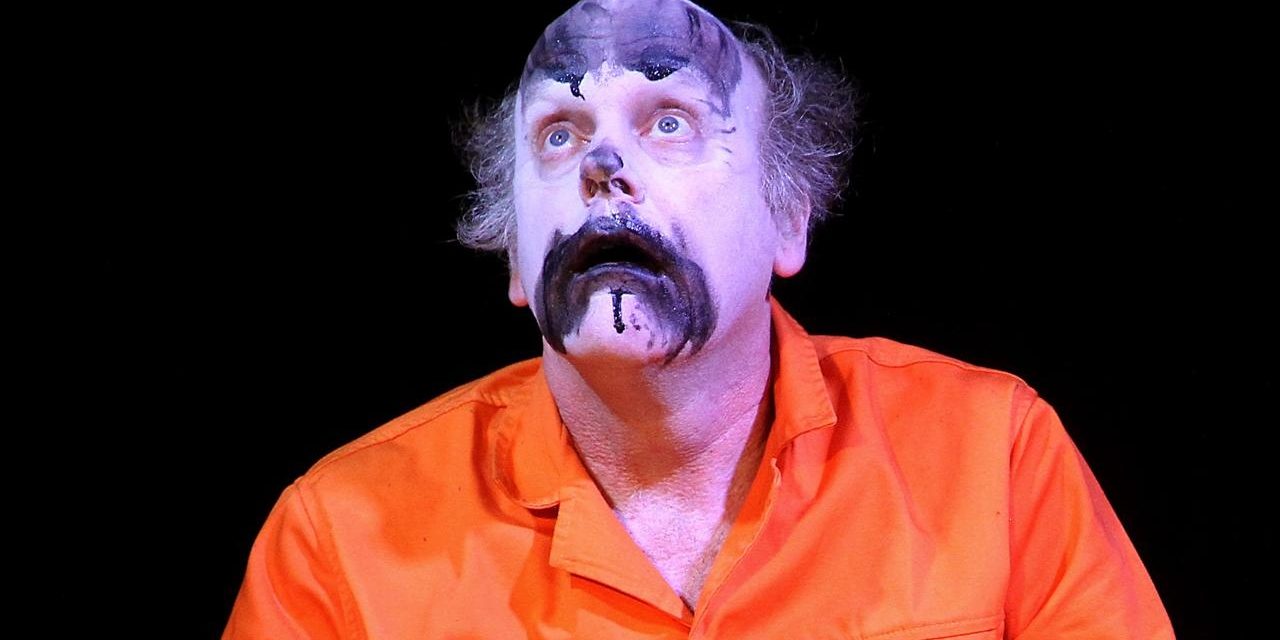
Sjaka Septembir is performing Dolliwarie at Theatre Arts in Cape Town on May 22-24, 2025. How to describe the piece? Perhaps this, he reflects: “Dolliwarie is absurd-poetic guerrilla theatre — a fusion of vaudeville, physical drama, and the theatre of the absurd”. Perhaps, there will be more to add. Septembir keeps refining a “description” of the piece. He can say that with Dolliwarie, he wants adults to “seriously invite play back into their lives” and explore their inner clown. With a body of work that straddles physical theatre, literature and philosophy, Septembir explores the tension between emotional repression and release. As a writer, poet, performer, director, clown, he is “infinitely curious about delving below the surface” and the “power of discovering true fun” which is “infectious”. And yes we talk about his chosen name, Sjaka Septembir.
TCR: Let’s talk about the title, Dolliwarie. You have said that Dolliwarie is the anti-hero?
Sjaka Septembir: Yes, Dolliwarie is our ‘anti’ hero. We meet him in jail. He only says swear words. He magically moves into an alternative world through his bed frame. Here we see his story. He is a clown. He has a pet bird. His father is controlling. Wants him to get a real job. Father kills bird. In rage Dolliwarie kills his father,
The show starts off with clowning, a bit of cabaret. I used this medium in my shows SKOP! And Nag van die Slag-Uil. Using music to tell a bit of the story. Dolliwarie might be a tragic character and the piece centres around a nihilism that is born out of years of Nietzsche and a future that looks bleak for our humanity, but the bird, the bird is hope. The bird is nature. Nature will survive and go on, despite our precious human situation.
TCR: You grew up in Port Elizabeth. Has the father in Dolliwarie been inspired by your own father or is he based on a lot of fathers and “emotional repression”?
SS: I was born in PE and grew up in East London. Both my parents thought that the best path for my future would be for me to become an engineer. To aid this path I switched to a technical school in high school – no art classes, no drama. In my five years of high school we once did a school play. I stole the show and immediately knew, this is what I want to do, acting. My parent would have none of that. I eventually became a Bukowski-aspiring bum and a drop-out, until I made my way back to study acting at the age of 30. A lot of this is documented in my first novel Die bardo van Biko April. The follow up novel is already at my publishers, Dwaas in Doodloopstraat, which continues the tale and will be out at the end of the year [2025].
TCR: Can you talk about the genesis of Dolliwarie from its development and debut at 2022 Vrystaat Kunstefees to this season at Theatre Arts?
SS: It is a Covid baby. My wife and I – both artists – ended up living on a farm in the Free State. Our nearest neighbours were 5km away. I’m always dabbling with making new work. We had Wi-Fi so I asked Aldo Brincat if he would direct me via Zoom. I decided to take the piece to the Free State Festivals Fringe. This was a strange experience. They have judges who award prizes to shows that are performed. One of the judges came to me afterwards and could not get his head around it: “Why are you doing a clown show for adults?” That is exactly the outlook that I would like to challenge, that is the outlook that the whole piece challenges. That we as adults are keen to put things into neat boxes. Clown shows are for kids. Shakespeare is for adults. That is a bleak way of looking at the world. Things don’t work like that. Take an example of something simple like the word ‘freedom’. It seems simple, yet if you start asking yourself, what is freedom. It means many different things to many different people. A woman in Iran’s idea of freedom is very different from a person in a Russian prison idea of freedom, etc. I want us to go beyond the surface of things, be curious. The way children are curious. I want adults to seriously invite play back into their lives.
TCR: Can you talk about play and clowning which is integral to your work?
SS: When I studied at AFDA I was lucky to work under great teachers such as James Cunningham, Helen Iskander, Sylvaine Strike and Craig Morris. I fell in love with physical theatre and clowning. In this time James Cunningham told us about this one teacher in the world who was teaching the ‘black nosed clown’. It is a dark clown – think of the Joker in Batman – a trickster character. Where the Augusty clown is innocent and gets himself into trouble, the black nosed clown does so premeditatedly. This was my first attempt at working with this element, at delving into the darker side of clowning.
TCR: Is it Augusty clown or August Clown – or does it matter?
SS. The first know Augusty clown was created by Tom Billing in 1860. Clowns come in families – to understand the complexity we have to go back to Commedia dell’arte – because clowns need to actually be in a family. This is the reason why I believe we have ended up with scary clowns. They have ripped clowns out of their families so as to promote products, such as Ronald McDonald. The Spur had Chico the clown. An Augusty clown is a lower status clown and in the family he plays next to a serious clown – white faced clown. It’s a status game. The white face clown will proclaim something serious and the Augusty clown will undermine his haughtiness, and then we laugh. In Dolliwarie I play Dolliwarie as an Augusty clown. When he loses his nose he becomes a white faced clown. And eventually he is transformed into a black nosed clown. I also play off the audience. This works best when the audience takes on the role of the white faced clown. Then it is fun. Sometimes an audience member will try and be an Augusty clown, try and be funny, or clever and then it becomes more of a challenge for the performer – but that is all part of the game of live theatre. Every evening is unique and special.
TCR: Staying with clowns, please tell us about the Bloem Klown Troop which you started?
SS: While we were on the farm outside Bloemfontein, I started the Bloem Klown Troop. I trained people from the township in clowning. The two clowns that I used in this production during the Free State Festival came from the Bloem Klown Troop. The Klown Troop is still posting me videos of how they are working with children in their community. This is something that speaks of the power of clowning; the power of play and the power of discovering true fun. Once you have felt it is infectious. The truth in the joy that you have discovered and then share, that joy spills over to those around you. That’s why I teach and mentor people. That is why I make work such as Dolliwarie.
TCR: Circling back to Dolliwarie – can you talk about the sound and lighting design? Is live music performed on stage?
SS: Jacques du Plessis from Mr Cat and the Jackal helped me with the first run. He made a great song for Dolliwarie. I have now roped in Gertjie Besselsen to record some additional tracks. The music is original and recorded. It adds that psychological twist. The most challenging lighting wise is to get the right lighting on the bird. In the previous version we had the puppeteer use a headlight, so that he could light the bird himself.
TCR: If we may talk about you. Where did you study?
SS: I went to the Navy after matric, national service. Then stayed on, living all over, Paarl, Stellenbosch, Cape Town. I have a BA from AFDA in Johannesburg and a MA from UCT. I am currently doing my PhD Stellenbosch (in writing)
TCR: I have to ask you about your chosen name – Sjaka S. Septembir – not to ‘explain’ – hope this is not intrusive. The work is what matters but still. Google proclaims your name as a pseudonym – and that implies that one is hiding behind a name – concealing an identity. I see Sjaka S. Septembir as an identity. In an interview, Claudia Hauter writes about you: “He has adopted many names through the years such as Jan Afghanistan and Dr. Adam Chaos. But ‘nothing is solid, everything changes’ and eventually he mellowed out.” https://www.claudiahauter.com/2010/07/11/an-interview-with-sjaka-septembir/ May I ask, when did you shed your birth name? Who is Sjaka S. Septembir?
SS: Great question. Sjaka S. Septembir happened instinctively during PORSELYNNKAS – the performance art group I started in 1996. Matthew Kalil made a documentary about the group https://www.youtube.com/watch?v=X4JLVYNqRNY&t=1649s. But it was a central seed to all the artistic choices that I have made since. I don’t think it’s is more of a mask to hide behind than any other person’s name. I view it in the light of a name change such as the Biblical Saul that became Paul. Or as in the Muslim tradition where one gets a new name when you adopt the faith. I also had many personal heroes from the late 80s early 90s that made this sea-change. Johannes Kerkorrel, Koos Kombuis, Valiant Swart. Although Sjaka might have happened instinctively it became the something to contemplate in-depth in my MA, which I wrote on ‘The Myth of the Self”. If you want the exact tale of how my name changed, read Die bardo van Biko April. All that is left to say is that even my mother now calls me Sjaka.
TCR: Is your birth name known out there or has the transformation to Sjaka surpassed your birth name?
SS: My ID name is Karl Groger – with two dots on the O – Gröger. My dad is Austrian. When you asked me this question Baba Ram Dass, immediately came to mind. He crossed my path in the mid 90’s. I was dating a girl whose mother did ‘colour healing’ and ‘tarot’, etc. Coming from a conservative Christian background into this whole new world was what I had longed for and I dived into all this ‘new age’ stuff. Baba Ram Dass stood out because of his association with Timothy Leary and the Beats. Then later I read an article where he was bemoaning his loss of Richard Alpert, his birth name. I can relate to some extent. I am not angry towards Karl. Years back, when looking up Karl Gröger, I found that this was a name of a member of the Dutch resistance and he has a wonderful story attached to his life, such as working for the resistance newspaper called Rat Poison. It’s a cool name. The last two years I have been drawn towards the Akashic Records. What I found interesting is how one needs to work with your birth name in the records. This has inadvertently brought my family on my father’s side back into my life in very strange ways and have shown me that this is a part of me that I have wiped under a rug and which I am facing up to now. The play is part of this process. For me work in the theatre always has to be part of something bigger. This does not mean this something bigger is just about me, this bigger core resonates with many people who have been estranged from their roots in different ways. So hopefully that shines through.
TCR: You are very much inspired by Kafka and Murakami but as Leonard Cohen says in his 2008 Live Concert in London at the 02, cheerfulness pokes through – or words to that effect. Die Uitweg, your play staged recently at Suidoosterfees, was inspired by the Kafka short story, Blumfeld, an Elderly Bachelor. I found the short story rather bleak and yes it was unfinished, maybe Kafka couldn’t finish it. But your Uitweg, left me feeling hopeful, with cheerfulness shining through. Can you talk about your anti-hero Dolliwarie as he “explores guilt, the absurdity of control, and the liberating power of the inner clown”?
SS: Dolliwarie might be too far gone for the light to reach him? The whole concept of tragedy in Greek theatre is that you do not give the audience a happy ending so that they can find a happy ending for themselves. We have restless brains and our brains are not content with open ended or unhappy endings, so – even if it is in our subconscious – we will go to work on this experience (this story) and find a happy ending. When scientists ask people to reflect back on their lives, they remember the positives more than the negatives. We are constantly building our life story into something of greatness, or something of hope – unless your clinically depressed, which is another story. The point is, stories with happy endings do not leave our subconscious with much to chew on. It is already solved, like a Happy Meal at McDonalds; it has no roughage.
✳ This interview has been lightly edited for length. For the Dolliwarie press release, see https://thecaperobyn.co.za/stage-dolliwarie-a-theatrical-fever-dream-of-absurd-beauty-and-emotional-truth/
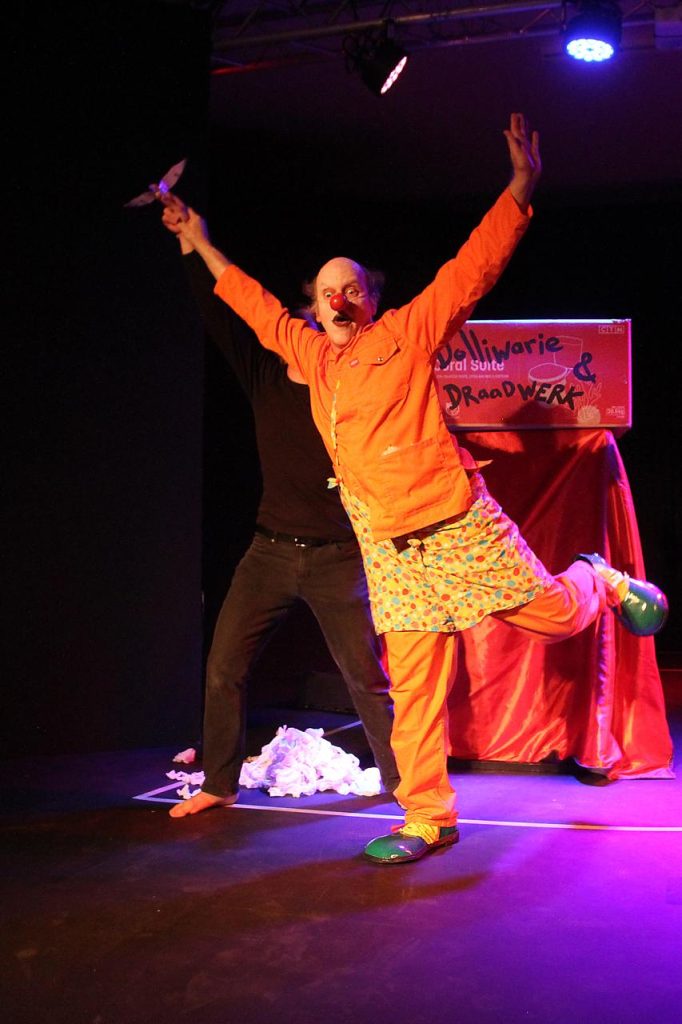
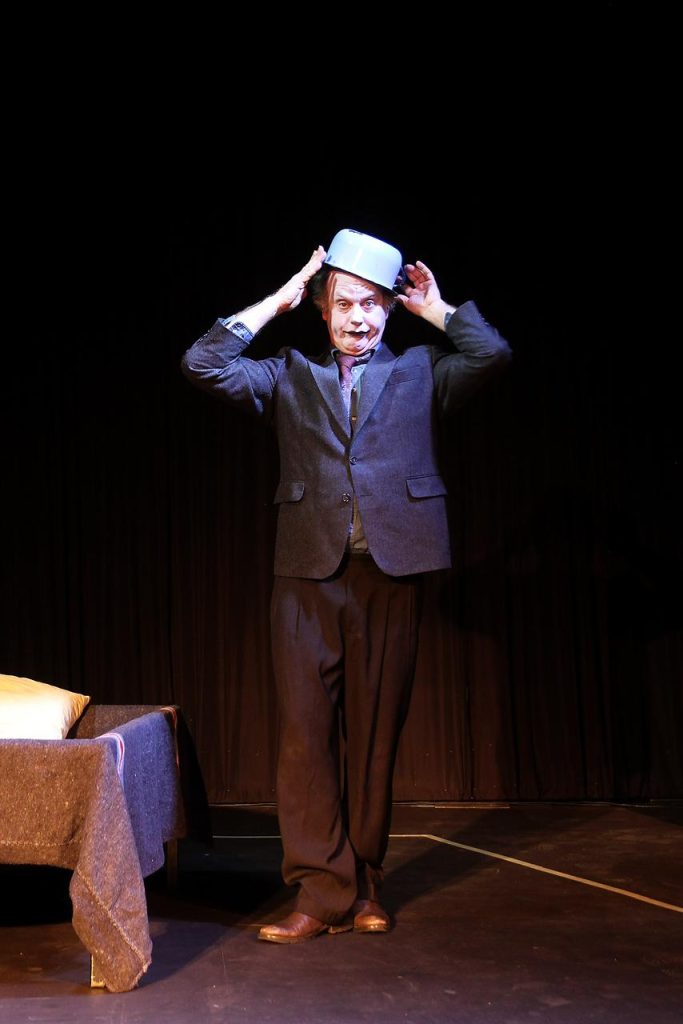
✳Sjaka Septembir has created and performs in Dolliwarie, which will be presented at Theatre Arts in Cape Town, on May 22-24, 2025.